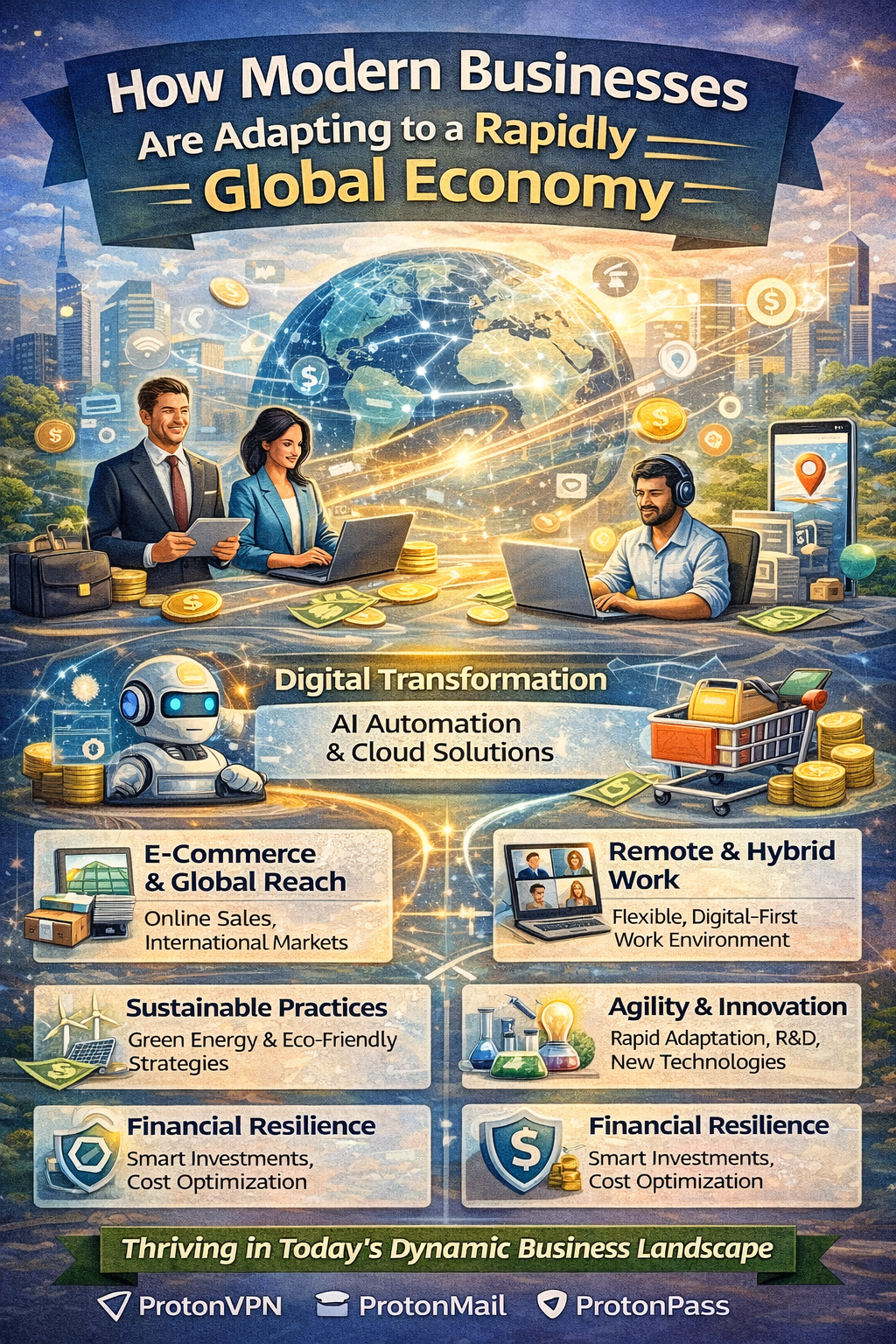
The global business landscape is undergoing one of the most significant transformations in modern history. Advances in technology, shifting consumer behavior, geopolitical developments, and economic uncertainty are forcing organizations to rethink traditional business models. Companies that once relied on stable markets and predictable growth patterns now face constant disruption. In this evolving environment, adaptability has become the defining characteristic of successful businesses. From startups to multinational corporations, organizations that embrace innovation, resilience, and strategic planning are better positioned to survive and thrive. This article explores how businesses are adapting to global change, the strategies driving sustainable growth, and the key trends shaping the future of commerce.
The Changing Nature of Global Business
Globalization has long connected markets, but recent years have accelerated this interconnectedness. Supply chains span continents, customers access products instantly, and competition is no longer local—it is global.
At the same time, businesses face new challenges:
-
Economic volatility and inflation
-
Supply chain disruptions
-
Rapid technological advancement
-
Rising expectations around transparency and ethics
These forces have reshaped how companies operate, invest, and plan for the future.
Digital Transformation as a Core Business Strategy
Digital transformation is no longer optional. Businesses across industries are integrating technology into every aspect of their operations.
Key areas of digital transformation include:
-
Cloud-based operations
-
Data-driven decision making
-
Automation and artificial intelligence
-
Digital marketing and customer engagement
Organizations that invest in scalable digital infrastructure gain flexibility, efficiency, and a competitive edge.
The Rise of Data-Driven Decision Making
Modern businesses rely heavily on data to guide strategy. Real-time analytics help leaders understand customer behavior, market trends, and operational performance.
Benefits of data-driven decision making include:
-
Improved forecasting accuracy
-
Better risk management
-
Enhanced customer personalization
-
Faster response to market changes
Companies that use data responsibly and ethically are more likely to build trust while maintaining long-term growth.
Remote Work and the Global Talent Pool
The rise of remote and hybrid work models has permanently changed how businesses hire and manage talent. Organizations now access global talent pools rather than being limited by geography.
Advantages of remote work include:
-
Reduced operational costs
-
Increased employee flexibility
-
Access to specialized skills worldwide
-
Improved work-life balance
However, businesses must also address challenges such as cybersecurity, communication, and performance management in distributed teams.
Financial Resilience and Business Sustainability
Financial resilience has become a critical priority for businesses navigating uncertainty. Companies are focusing on diversification, cost control, and sustainable revenue models.
Common strategies include:
-
Diversifying income streams
-
Strengthening cash reserves
-
Reducing dependency on single markets
-
Improving financial forecasting
Sustainable financial planning enables businesses to absorb shocks and remain competitive during economic downturns.
The Importance of Trust and Brand Credibility
In a digital-first economy, trust is one of the most valuable business assets. Consumers and partners increasingly choose brands that demonstrate transparency, reliability, and ethical practices.
Businesses build credibility by:
-
Providing clear communication
-
Delivering consistent value
-
Protecting customer data
-
Maintaining ethical standards
Strong brand trust directly influences customer loyalty and long-term profitability.
Innovation and Competitive Advantage
Innovation drives differentiation. Companies that continuously improve products, services, and processes are better equipped to compete in crowded markets.
Innovation does not always mean radical change. Incremental improvements, customer-focused enhancements, and operational efficiencies often deliver significant value.
Organizations that foster innovation culture encourage:
-
Experimentation
-
Cross-functional collaboration
-
Continuous learning
-
Adaptability to feedback
Small Businesses and Entrepreneurial Growth
Small businesses and entrepreneurs play a vital role in the global economy. Digital platforms have lowered barriers to entry, allowing small enterprises to reach international audiences.
Key growth enablers for small businesses include:
-
E-commerce platforms
-
Digital payment systems
-
Online marketing channels
-
Cloud-based business tools
With the right strategy, small businesses can compete alongside established players.
The Role of Business Media and Information Platforms
Access to reliable business information is essential for decision-making. Business leaders increasingly rely on digital publications, research platforms, and industry insights to stay informed.
High-quality business content:
-
Supports strategic planning
-
Informs investment decisions
-
Highlights emerging trends
-
Encourages informed debate
Ethical Business Practices in a Transparent World
Ethics and corporate responsibility are no longer optional considerations. Consumers, investors, and regulators expect businesses to operate responsibly.
Ethical business practices include:
-
Fair labor standards
-
Environmental responsibility
-
Honest marketing
-
Compliance with regulations
Companies that prioritize ethics build stronger reputations and reduce long-term risk.
Global Expansion and Market Diversification
Expanding into new markets remains a key growth strategy. However, successful expansion requires careful research and cultural understanding.
Important considerations include:
-
Local regulations and compliance
-
Cultural preferences and consumer behavior
-
Currency and economic stability
-
Strategic partnerships
Businesses that approach global expansion thoughtfully increase their chances of sustainable success.
Technology, Security, and Business Continuity
As businesses digitize operations, security becomes essential to continuity. Cyber threats, data breaches, and system failures can cause significant financial and reputational damage.
Best practices include:
-
Secure digital infrastructure
-
Regular system updates
-
Employee awareness training
-
Backup and recovery planning
Proactive security measures protect business assets and customer trust.
Frequently Asked Questions (FAQ)
How are businesses adapting to economic uncertainty?
Businesses are focusing on diversification, digital efficiency, and strategic planning to remain resilient.
Why is digital transformation important for modern businesses?
Digital transformation improves efficiency, scalability, and competitiveness in a fast-changing market.
Can small businesses compete globally?
Yes. Digital tools and online platforms enable small businesses to reach international customers effectively.
What role does trust play in business success?
Trust drives customer loyalty, brand reputation, and long-term profitability.
How can businesses prepare for future disruptions?
By investing in technology, data analysis, financial resilience, and adaptable business models.
Conclusion: The Future of Business in a Dynamic World
The future of business belongs to organizations that embrace change, prioritize innovation, and operate with integrity. In a rapidly evolving global economy, adaptability is not just a competitive advantage—it is a necessity.
By leveraging digital transformation, building trust, and making informed decisions, businesses can navigate uncertainty and create sustainable growth. As markets continue to evolve, staying informed and connected to reliable business insights will remain a critical component of long-term success.