
Adams Pool Solutions, the established Bay Area pool renovation specialist operating since 1953, today released comprehensive guidance to help homeowners determine when their swimming pools require resurfacing versus replastering, addressing common confusion about pool surface maintenance and replacement options.
With over 29,000 pool renovations completed across the San Francisco Bay Area, Central Valley, and Monterey Peninsula, the Pleasanton-based company has identified key indicators that signal when pool surfaces need professional attention. These signs include visible etching, staining that cannot be removed through chemical treatment, rough textures that can cause injuries, and delamination where the surface material separates from the underlying structure.
"Pool surface deterioration typically becomes noticeable after seven to ten years for standard plaster finishes, though environmental factors and maintenance practices significantly impact longevity," said Ray Langford, Marketing Director at Adams Pool Solutions. "Understanding the differences between surface materials helps homeowners make informed decisions that align with their budget and long-term pool maintenance goals."
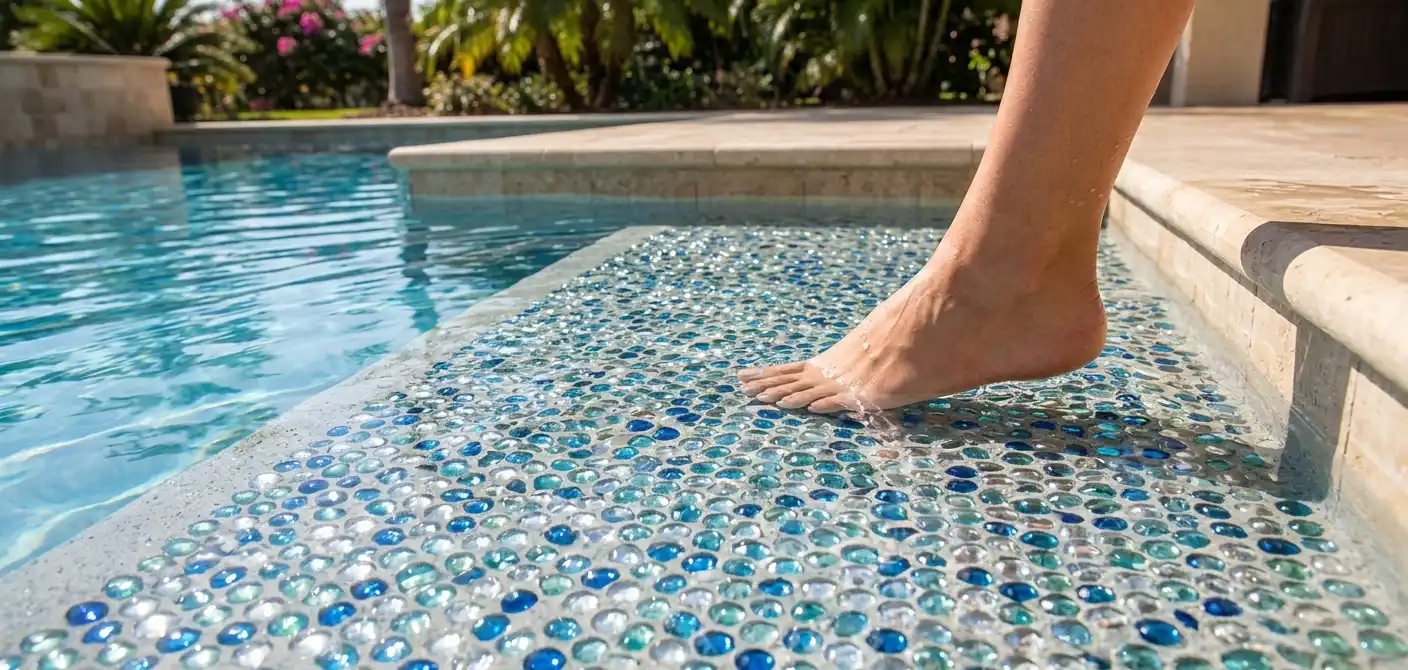
The company distinguishes between three primary surface finish options available to Bay Area homeowners. Traditional white plaster remains the most economical choice, offering a smooth finish that typically lasts seven to ten years with proper maintenance. Quartz finishes incorporate colored quartz crystals into the plaster mixture, providing enhanced durability and aesthetic appeal with an expected lifespan of ten to fifteen years. Pebble finishes, which embed small river pebbles into the surface material, deliver the longest service life at fifteen to twenty years while offering superior resistance to chemicals and staining.
Adams Pool Solutions pool resurfacing in the Bay Area encompasses both residential and commercial properties, with the company completing approximately 1,200 projects annually. The decision between resurfacing and replastering depends on several factors including the extent of surface damage, structural integrity of the existing shell, and homeowner preferences for finish type and color.
Replastering involves removing the existing surface completely and applying new material, typically necessary when surfaces show extensive cracking, hollowing, or structural compromise. Resurfacing, conversely, addresses cosmetic issues and minor surface degradation without complete removal, making it a more cost-effective option for pools with fundamentally sound surfaces.
Adams Pool Solutions provides pool resurfacing and replastering for homeowners across the San Francisco Bay Area. The company employs approximately 340 professionals including design specialists, construction crews, and project coordinators who collaborate to streamline the renovation process.
Seasonal considerations also influence resurfacing decisions in the Bay Area climate. Spring and early summer represent optimal timing for pool renovation projects, allowing surfaces to cure properly before peak swimming season while avoiding winter rain delays.
https://www.youtube.com/watch?v=e2npDBFtbcI
Adams Pool Solutions maintains affiliations with the California Pool and Spa Association, National Plasterers Council, Pool and Hot Tub Alliance, and Better Business Bureau. The family-operated company has established itself as a leading pool renovation specialist through seven decades of service to Bay Area communities, combining traditional craftsmanship with contemporary surface preparation techniques and materials.
###
For more information about Adams Pool Solutions, contact the company here:
Adams Pool Solutions
Ray Langford
(925) 828-3100
info@adamspools.com
3675 Old Santa Rita Rd, Pleasanton, CA 94588